
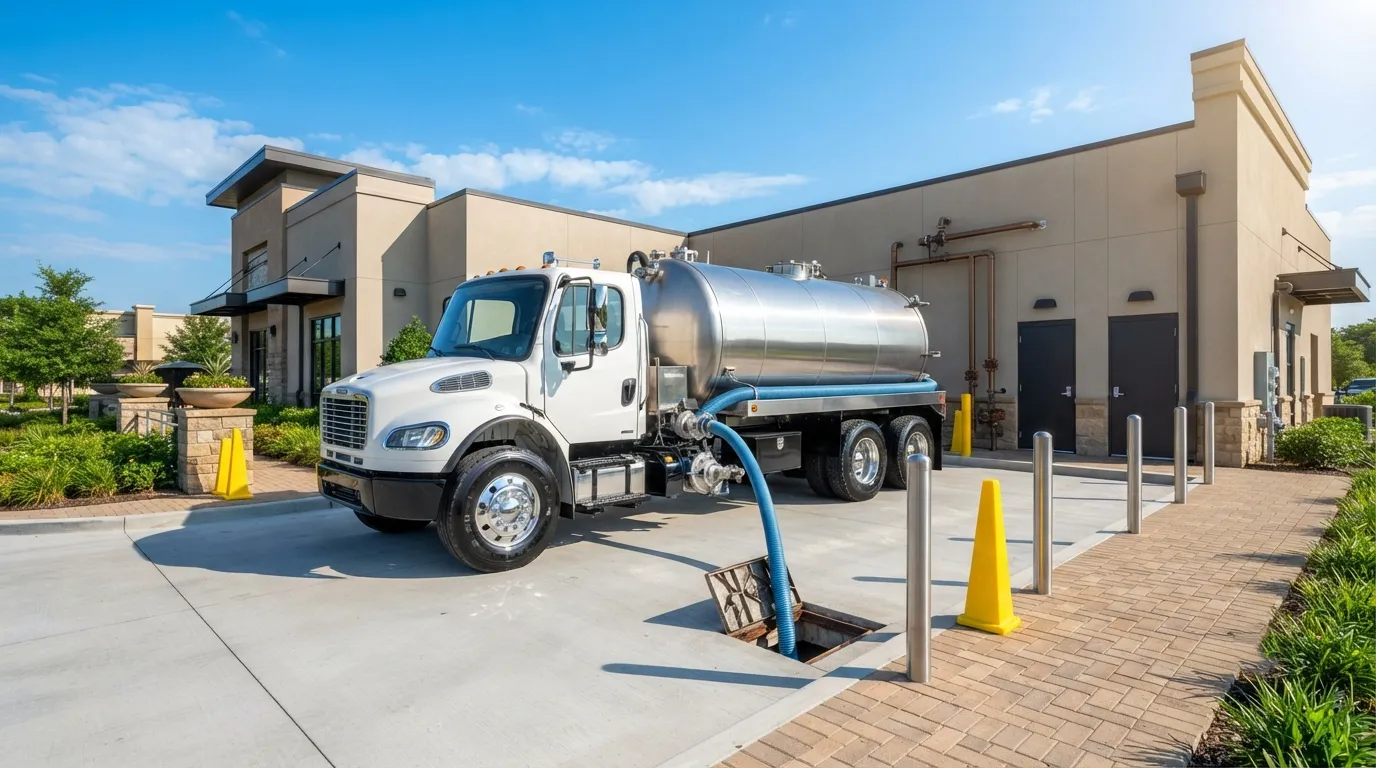
What Does Grease Trap Pumping Cost?
Pricing depends on tank size, access, and how often you need service. A septic-style pump-out for a smaller interceptor runs in the $150 to $300 range for a single visit, similar to the septic pumping service pricing structure we use citywide. Bigger commercial interceptors cost more because of volume and disposal fees, and the math is similar to how we price monthly porta potty rental against a single day out on a jobsite. If you are weighing a one-time cleanout against a standing schedule, check septic tank pumping cost for the comparison, and ask about a recurring plan the way you would for how often to pump a septic tank at a house. Restaurants near the Gratiot Avenue corridor tend to need tighter intervals than a strip mall cafe with lower fryer volume. We quote by tank size and grease load, not a flat number, because a 500 gallon interceptor and a 2,000 gallon unit are not the same job, the way a 10 yard dumpster rental and a 30 yard dumpster rental are not the same job either. If your kitchen shares a lot with other tenants, ask us to look at combined scheduling, similar to how we coordinate holding tank rental for multi-unit sites.
How Often Should a Commercial Kitchen Pump Its Grease Trap?
Most Clinton Township kitchens land on a 4 to 8 week cycle, but the real driver is the 25 percent rule: once grease, oil and solids reach a quarter of the tank's liquid depth, it is time to pump. Waiting past that point risks a slow drain, a sewer backup, or a code violation during a health inspection, much like ignoring porta potty warning signs on a jobsite leads to a bigger mess than a scheduled septic pumping service visit would have caught. High-volume fryers and grills push that timeline shorter. A commercial grease trap pumping schedule should be set the same way a household septic tank cleaning plan gets set: by usage, not the calendar. We track service dates for repeat clients so nobody has to guess, the same way we log intervals for handwashing station rental accounts that need soap and towels restocked on a cycle. If you are opening a new location and building out a kitchen, pair this with construction site services planning so the interceptor gets installed and scheduled before you open the doors. Kitchens running catering out of the same space, including seasonal work tied to farm and agricultural restrooms events, often need a tighter interval during peak months.
Do You Offer Emergency Grease Trap Pumping Near Me?
Yes. A grease trap that backs up during dinner service does not wait for a Monday slot, and we run emergency grease trap pumping across Clinton Township for exactly that reason. Same logic applies to emergency septic service calls: a fast response beats a scheduled one when a line is already backing up into the kitchen. We cover Clinton Township directly and reach Tecumseh, about 4.8 miles south, and Raisin, roughly 9.0 miles south, on the same emergency routes, and you can check service areas for the full coverage map. If your grease trap failure has already caused water damage or flooding near a walk-in cooler, our disaster relief sanitation crews can support cleanup alongside the pump-out. For food trucks and mobile vendors working events, a smaller grease interceptor should be checked against the same 25 percent rule, and we can service those on-site too, much like our emergency porta potty rental work for event operators, or the portable sink rental units we drop for outdoor food service.
How do I know if my grease trap needs pumping?
Slow drains, a sulfur smell near the trap, or grease surfacing in the sink are the signs. The 25 percent depth rule is the technical trigger. If you are unsure, we can inspect it during a routine septic tank cleaning stop and tell you honestly whether it can wait, the same visit where we'd flag anything covered in our porta potty rental checklist for a site with both needs.
Can grease trap pumping happen during business hours?
It can, and most Clinton Township kitchens prefer it that way rather than paying overtime staff to open early. Access to the trap matters more than timing. If the unit sits under a loading dock or behind parked cars, tell us before the crew arrives.
What size grease trap does a restaurant need?
That depends on seating count and cooking volume, not a fixed number we can quote blind. A full-service kitchen with fryers needs a larger interceptor than a coffee shop, roughly the same logic as sizing a 4 stall restroom trailer versus a single unit for a small crew. We size new installs during construction planning, similar to how we scope construction dumpster rental needs for a build-out.
Is grease trap pumping different from septic pumping?
Yes. A septic tank handles household wastewater and gets pumped every 3 to 5 years typically. A grease trap fills faster because it is built to catch fats and oils specifically, so it needs pumping on a much shorter cycle, often monthly or every other month.
Do you handle both restaurants and food trucks?
We do. Restaurants get scheduled commercial grease trap pumping on a set interval, while food trucks and mobile vendors often need standalone or event-based service, similar to how we support festival restroom rental clients with portable equipment during a single event, and how county fair restrooms get set up for a short run rather than a year-round contract. If you're weighing a full rental plan alongside your grease service, our request a quote page walks through both at once, and general frequently asked questions covers scheduling basics too.
Next step
Get a delivery date
Tell us the address, the dates and the headcount. We size the order and confirm the route.